
Innovation in materials and finishes applied to signs and vinyls
Innovation in materials and finishes applied to signs and vinyls has become a key factor in achieving professional results.
Signage and visual merchandising have evolved remarkably in recent years. Today, companies not only seek to communicate their brand, but also to do so through attractive, durable visual solutions adapted to different environments. In this context, the innovation in materials and finishes applied to signs and vinyls has become a key factor in achieving professional and distinctive results.
Advances in sign materials, printing technologies, and new sign finishes allow for the creation of more durable, versatile, and aesthetically striking visual solutions. From commercial facades to corporate interiors, the right choice of materials can make the difference between standard signage and one that truly stands out.
The importance of choosing good materials for signs
When a company decides to install a sign, it’s not just adding a decorative element: it’s creating a direct visual point of contact with its customers. Therefore, selecting the right sign materials is essential to ensure durability, visibility, and consistency with the brand identity.
Signs must adapt to different environmental conditions, especially when installed outdoors. Factors such as sun exposure, humidity, and temperature changes directly affect the performance of the materials. Therefore, the modern signage materials are designed to offer greater durability and maintain their appearance for longer.
Among the most commonly used materials in signage we find:
- Aluminum and steel for strong and modern structures
- Acrylic for elegant and luminous signs
- Expanded PVC for lightweight and versatile solutions
- PVC expandit per a solucions lleugeres i versàtils
Each of these materials applied to signs and vinyls allows for the development of customized solutions according to the space, design and needs of the business.
Innovation in materials applied to signs and vinyls
Innovation in the signage sector has driven the development of new materials applied to signs and vinyls that offer better technical and aesthetic performance.
One of the main advances has been the improved resistance of the materials to sun exposure and weather conditions. The new materials incorporate treatments that reduce wear, prevent fading, and extend the lifespan of the sign.
Another important aspect is sustainability. More and more manufacturers are opting for recyclable or environmentally friendly signage materials, contributing to more responsible visual communication.
Furthermore, digital printing technologies allow working with more flexible and adaptable materials, which facilitates the customization and design of unique projects.
Sign finishes that make a difference
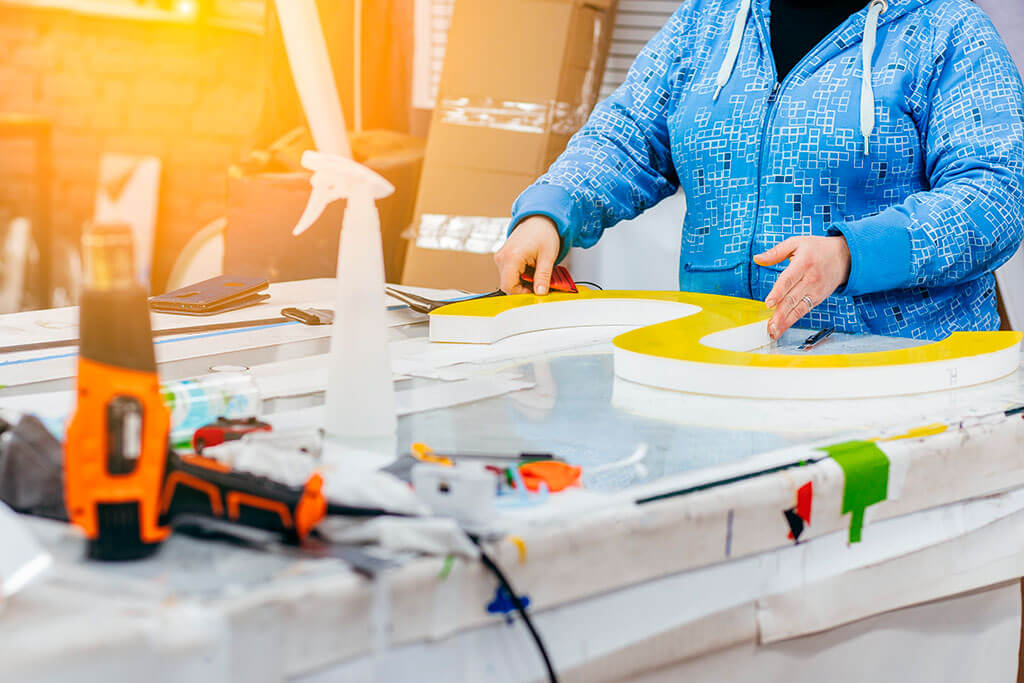
Beyond the base material, sign finishes play a fundamental role in the final result of any signage project. Finishes not only influence the sign’s aesthetics but also its durability, visibility, and ability to convey a brand’s identity. Choosing the right finish enhances the design, highlights the colors, and ensures the sign maintains its quality over time.
Currently, advances in materials used for signs and vinyl graphics have allowed for the development of a wide variety of finishes that adapt to different styles and needs. From minimalist solutions to more eye-catching designs, these finishes help to enhance the visual impact of the sign and make it stand out in its surroundings.
Among the most commonly used finishes are:
Matte finish
A matte finish is a highly valued option for projects seeking an elegant and understated aesthetic. It reduces light reflections, making the sign easier to read under varying lighting conditions. It is especially suitable for interior spaces, corporate offices, or environments where a sophisticated image is desired.
Gloss finish
The glossy finish intensifies colors and adds luminosity to the design. This type of finish is very common in shop windows, commercial signs, and outdoor applications where the goal is to immediately capture the public’s attention. It also highlights graphic elements and enhances the brand’s visual impact.
Protective laminated finish
One of the most commonly used finishes for vinyl lettering is protective laminate. This coating acts as an additional layer that protects the design from scratches, moisture, sunlight, and wear. Thanks to this finish, signs maintain their appearance for longer, even in outdoor environments with demanding weather conditions.
Textured or special finishes
Innovation in signage has allowed for the incorporation of finishes that mimic textures such as wood, metal, stone, or even three-dimensional effects. These finishes provide a more exclusive look and allow for the creation of signs with greater personality. They are especially used in commercial interior design projects, hotels, restaurants, or spaces where design plays a key role.
How to choose the best materials for signage
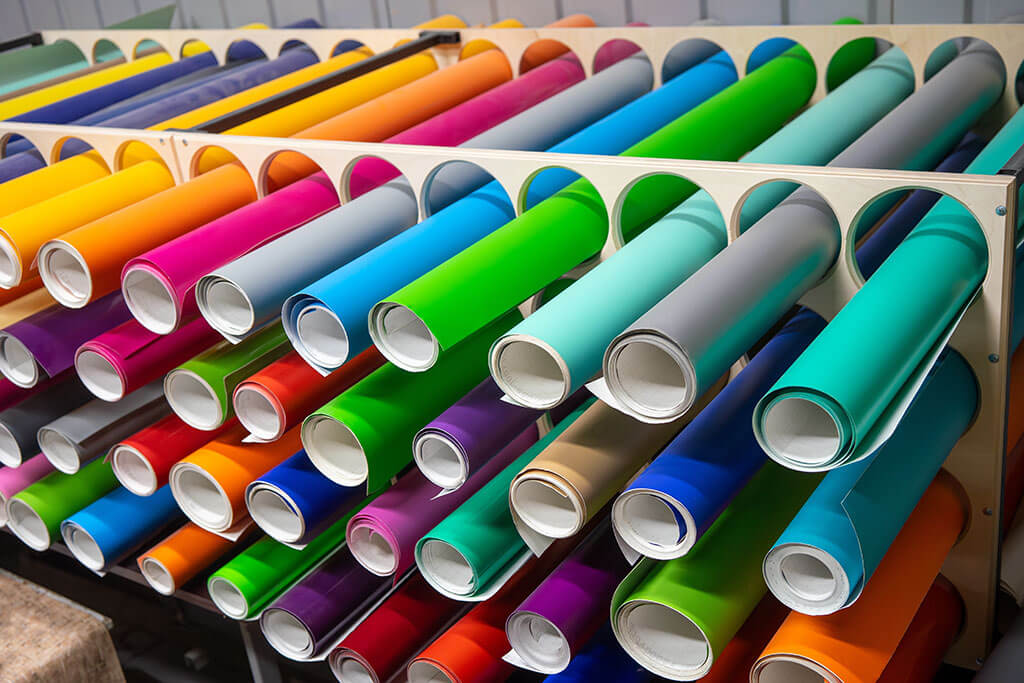
Selecting the right signage materials is one of the most important decisions in any signage project. Each space, surface, and communication objective requires different solutions, so it’s important to analyze several factors before choosing materials.
One of the first aspects to consider is the location of the sign. Signs installed outdoors must be made with materials resistant to sun, rain, wind, and temperature changes. Indoor signs, on the other hand, can focus more on design and aesthetics, as environmental conditions are more stable.
Another key point is the durability of the project.. Some businesses need temporary signage for campaigns or events, while others seek permanent solutions. In these cases, using higher-quality materials applied to signs and vinyl ensures greater durability and reduces long-term maintenance.
It is also essential to consider the surface where the lettering will be applied. Not all materials perform equally well on glass, metal, walls, or vehicles. For example, vinyl lettering should be chosen based on its adhesion and flexibility to ensure it conforms properly to each surface.
Finally, having expert advice helps to identify the most suitable signage materials for each project, combining materials, printing techniques and finishes that optimize both the visual result and durability.
Innovation in sign materials, vinyl lettering and sign finishes has transformed how businesses communicate their visual identity. Choosing the right sign and vinyl materials not only enhances the aesthetics of a space but also ensures durability, functionality, and visual impact.
Contact us and discover how a luminous sign can make your business stand out… always.
📍 Visit us at: www.grafiksestudio.com
Request your quote today!